
Program:
-
Hossein Dehlavi (1927–2019) Arr. Kousha Nakhaei (b. 1981)
Sabokbāl literally means light-winged, and refers to the dance-like nature of this composition. The main theme of this piece is taken from a shepherd dance from the reigon on Ghāsem-Ābad in northern Iran.
-
Rouhollah Khaleghi (1906-1965), Lyrics by Shahriyar (1906 -1988) Arr. Kousha Nakhaei
Originally immortalized by the legendary vocalist Gholamhossein Banan, Hālā Cherā is one of the most deeply moving art songs (tasnif) in the Persian classical repertoire, composed by Rouhollah Khaleghi. The title translates to "Why Now?", based on a famous poem written by Shahriyar when a past lover returned to him much too late in life. The lyrics compare this late arrival to "a healing potion brought after the death of Sohrab" (a tragic reference to Ferdowsi's Shahnameh). Khaleghi’s lyrical arrangement beautifully captures this profound sense of bittersweet irony, longing, and romantic resignation.
-
Hossein Dehlavi (1927–2019) Arr. Kousha Nakhaei
Ostad Abolhasan Saba (1902–1957) is universally recognized as one of the most influential and monumental figures in the history of traditional and instrumental Persian music. This piece is based on one of his meldies titled Be Yād-e Gozashteh (in memory of past times).
-
Music and Words by Aref Ghazvini (1882 – 1934), Arr. Kousha Nakhaei (b. 1981)
Az Kafam Rahā, written by the revolutionary poet-musician Aref Ghazvini around 1911. Lyrics are uniquely fierce, witty, and emotional. Unlike traditional Persian love songs that patiently romanticize heartbreak, the lyircs show a confrontation between the poet and his own rebellious heart.
-
Melody by Naser Masoudi (1935 - 2025), Arr. Morteza Hannaneh (1923 - 1989), re-arranged by Kousha Nakhaei
Alātiti is a tender lullaby from the lush, rain-forested Gilan Province. In the regional Gilaki dialect, Alātiti translates beautifully to the moon. Melody of this piece is by well-known Golha-era singer Naser Masoudi and an arrangement by pioneering Iranian composer Morteza Hannaneh. Tonight's vocalist, Sepiedeh Raissadat and artistic director, CGO Kousha Nakhaei, had the previlage of collaborating with this legendary icon sererval times in the past years. Mr. Masoudi passed away about a year ago in his home town of Rasht. We dedicate this piece to his lasting memory.
-
Haj Ghorban Soleymani (1920 - 2008), Arr. Kousha Nakhaei
Maqam Navai is part of the dotar repertoire of Ghoochan (Khorasan, a North-eastern province in Iran) arranged for orchestra by Kousha Nakhaei. It is sometimes imagined that folk music practiced in villages and small towns is simple in structure and form. This striking piece is a testament to the rhythmic and formal complexity of some of this repertoire. In it's original context it accompanies telling of epics and love stories in sung form. This arrangement is based on a recording by master dotar player Haj Ghorban Soleymani.
INTERMISSION
-
Hassan Kasaei (1928 - 2012), Arr. Saman Shahi (b. 1987)
Salām-e Sobhgāhi is perhaps the most ubiquitous and beloved instrumental piece in the entire canon of Iranian classical music. Composed by the iconic master of the Persian ney (reed flute). The title translates directly to "The Morning Greeting". True to its name, it is deeply woven into the cultural fabric of Iran as a sonic symbol of dawn, hope, and vibrant new beginnings. For decades, its energetic, uplifting, yet profoundly dignified melody has been used on national broadcasts to welcome the day, making it instantly recognizable to generations of listeners. This new arrangement is by Juno-nominated Iranian-Canadian composer, Saman Shahi.
-
Kamanche: Behnoosh Behnamnia
Vocals: Sepideh Raissadat
Tonbak: Ziya Tabassian
Poetry: Hafez -
Iman Vaziri (b.1970), Lyrics by Sahar Sakhaei (1986), Arr. Kousha Nakhaei
As part of a composition project in the Golha style led by Sepideh Raissadat, Herman (Longing) was composed by contemporary Iranian composer Iman Vaziri with lyics by Sahar Sakhaei:
"Deep within me, a breathless soul, like a nightingale trapped in a cage, cries out." -
Folk from Northern Iran (Rāmian), Arr. Rouhollah Khaleghi, Kousha Nakhaei
Folklore melodies from the northern regions of Ramian and Katul, arranged by Rouhollah Khaleghi. This piece featured a varietty rhythmic sections related to regional dances.
-
Ali Tajvidi (1919 - 2006), Lyrics: Rahim Moeini Kermanshahi (1926 - 2015), Arr. Rouhollah Khaleghi, Kousha Nakhaei
Originally recorded by the unmatched songstress Marzieh, Sang-e Khārā (meaning "Granite Stone") is one of the most powerful and dramatic masterpieces of 20th-century Persian music. The song opens with the narrator declaring that their intense grief and love's passion is not understood: "It is only right that I leave for the desert for a while, and take a granite stone (Sang-e Khārā) as a witness to this crazed heart."
-
Clarinet: Peter Stoll (Arr. K. Nakhaei)
Avaz: Sepideh Raissadat
Tar: Shahin Fayaz
Poetry: Sahar Sakhaei -
Rouhollah Khaleghi (1906-1965), Lyrics by Rahi Mo'ayeri (1909 - 1968) Arr. Golnoush Khaleghi (1941, 2021), Kousha Nakhaei
Bahar-e Aghegh is a poetic love song composed by Rouhollah Khaleghi, with evocative lyrics by Rahi Mo’ayyeri. A celebration of love blossoming in spring, the piece captures the delicate beauty of the season and the beloved. "When her face lights the night, the moon hides in awe— No rose petal is softer than her gentle face"
-
Rouhollah Khaleghi (1906-1965), Arr. Kousha Nakhaei
Rouhollah Khaleghi composed two Persian Suites (Rangārang), one in the mode Esfahan and another in Mahour. In these pieces, he created relatively long orchestral suites, including various metric and non-metric (Avazi) sections, that reflect some of the main melodies (gushe-ha) in each mode. This excerpt is taken from Rangarang in the mode Esfahan, and starts in the melody known as Bayat-e Raje’.
** Composition of this work was funded by Roshan Cultural Heritage Institute
Artist Bios:

-
Kousha Nakhaei is a conductor, violinist, kamanche player, and educator. He co-directs Sarv Music Academy, a music education centre he co-founded in 2013, curating a multifaceted music education program. He serves as the artistic director for Canadian Golha Orchestra, Sarv Strings and Sarv Choir and regularly arranges music for these groups. As an instrumentalist, he has performed with artists such as Sepideh Raissadat, Ali Rostamian, Naser Masoudi, and Loreena McKennitt. He has toured in Canada and the US with the Sarv Ensemble, Canadian Arabic Orchestra, and Canadian Golha Orchestra. He recently completed an intensive conducting course with Kenneth Keisler.
-
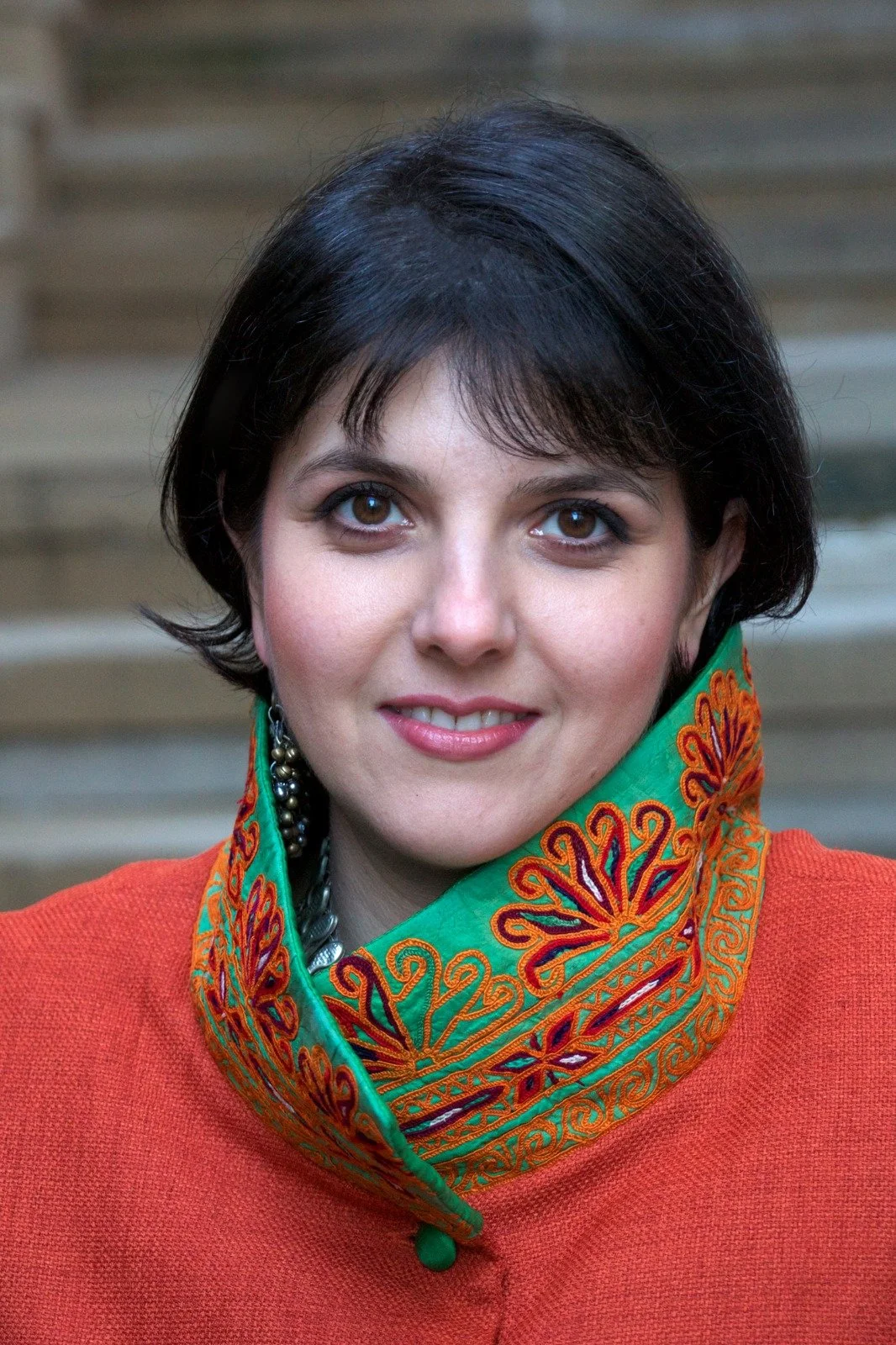
Sepideh Raissadat is an internationally acclaimed Persian classical vocalist and musician known for her refined and expressive performance of Iranian traditional music. She began her recording career at the age of 19 with an album with Master Parviz Meshkatian (Konj-e Saburi, 2000). Her first public concert happened during the same year at Tehran’s Niavaran hall. As a child, she began studying Persian classical music with the famous Iranian diva Parissa and later with renowned masters Parviz Meshkatian and Mohammad-Reza Lotfi. Ms. Raissadat has performed widely across Europe and North America, appearing at major festivals and prestigious venues including invitations by prestigious institutions, including UNESCO, the Vatican and international media such as BBC and RAI, and venues such as Lincon Centre. Her career has spanned concerts and recording projects with renowned musicians such as Parviz Meshkatian, Hamid Motobassem, Reza Ghasemi, Iman Vaziri, and Iman Habibi. She has performed with ensembles such as Orchestre Métropolitain de Montreal, Orchestra of St. Luke’s (New York), Nexus Percussion Ensemble, and the Canadian Golha Orchestra. Sepideh holds a B.A. degree in painting, a B.Mus degree from the University of Bologna and an MA in Ethnomusicology from the University of Toronto. She has received her PhD in Ethnomusicology from the University of Toronto.
Canadian Golha Orchestra
Conductor: Kousha Nakhaei
Violin 1: Bijan Sepanji, Behnoosh Behnamnia, Aysel Taghi-zada
Violin 2: Saba Yousefi, Rezan Onen-Lapointe, Ellen Moore
Viola: Rae Gallimore, Jeewon Kim
Cello: Niki Khabbazvahed, Emma Schmiedecke
Double Bass: Daniel Lalonde
Flute: Rana Mireskandari
Clarinet: Peter Stoll
Tar: Shahin Fayaz
Tonbak: Ziya Tabasian
Sound: Ramin Mazaheri
We acknowledge the support of following organizations:
GRANTING BODIES:


CO-PRESENTERS:


SPONSORS:


Community Partner:
Thank You!
CGO & GIMC Team
-
![]()
Hadi Milanloo
EXECUTIVE DIRECTOR
-
![]()
Nil Basdurak
DIRECTOR OF STRATEGIC PLANNING
-
![Behnoosh Behnamnia]()
Behnoosh Behnamnia
IRANIAN MUSIC ADVISOR
-
![]()
Shahin Fayaz
TAR, IRANIAN MUSIC ADVISOR
-
![]()
Bijan Sepanji
ORCHESTRAL ADVISOR
-
![]()
Kimiya Mobayeni
SOCIAL MEDIA SPECIALIST
-
![]()
Parinaz Shirazi
Administrative Assistant
-
![]()
Saeedeh Niktab Etaati
GIMC BOARD OF DIRECTORS (CHAIR)
-
![]()
Arman Masoumi
GIMC BOARD OF DIRECTORS (SECRETARY)
-
![]()
Afsaneh Vakilian
GIMC BOARD OF DIRECTORS (TREASURER)
-
![]()
Sinem Eylem Arslan
GIMC BOARD OF DIRECTOR (MEMBER)





SUPPORT US: